
The Best W-9 Tax Form Free Templates for Freelancers
Why Finding a W-9 Tax Form Free Download Matters for Freelancers

W 9 tax form free downloads are available directly from the IRS — and knowing where to get one (and how to fill it out correctly) can save you from costly penalties.
Here are the fastest ways to get a free W-9 form:
- IRS official PDF — Download directly at irs.gov/pub/irs-pdf/fw9.pdf (current version: Rev. March 2024)
- Fillable W9 online tool — Complete and sign your W-9 digitally at fillablew9.com/apply
- University or government resource pages — Many offer direct links to the official IRS PDF
If you just need the form fast, start filling your W-9 now at fillablew9.com/apply.
If a client or business has ever asked you to fill out a W-9 before they pay you, you are not alone. It is one of the most common tax forms in the United States for freelancers, independent contractors, and consultants. The IRS requires businesses to collect it from any non-employee they pay $600 or more in a year.
The problem? Many people are not sure where to get the right version, how to fill it out correctly, or how to avoid triggering a 24% backup withholding on their payments.
This guide walks you through everything — from finding a free, current W-9 form to filling it out without mistakes.
I’m Haiko de Poel, a fractional CMO and digital marketing strategist who has helped businesses streamline compliance and onboarding workflows — including securing a w 9 tax form free process for contractor-heavy organizations. In this guide, I’ll break it all down in plain language so you can get it done quickly and correctly.
What is a W-9 Tax Form Free Download and Why Do You Need It?
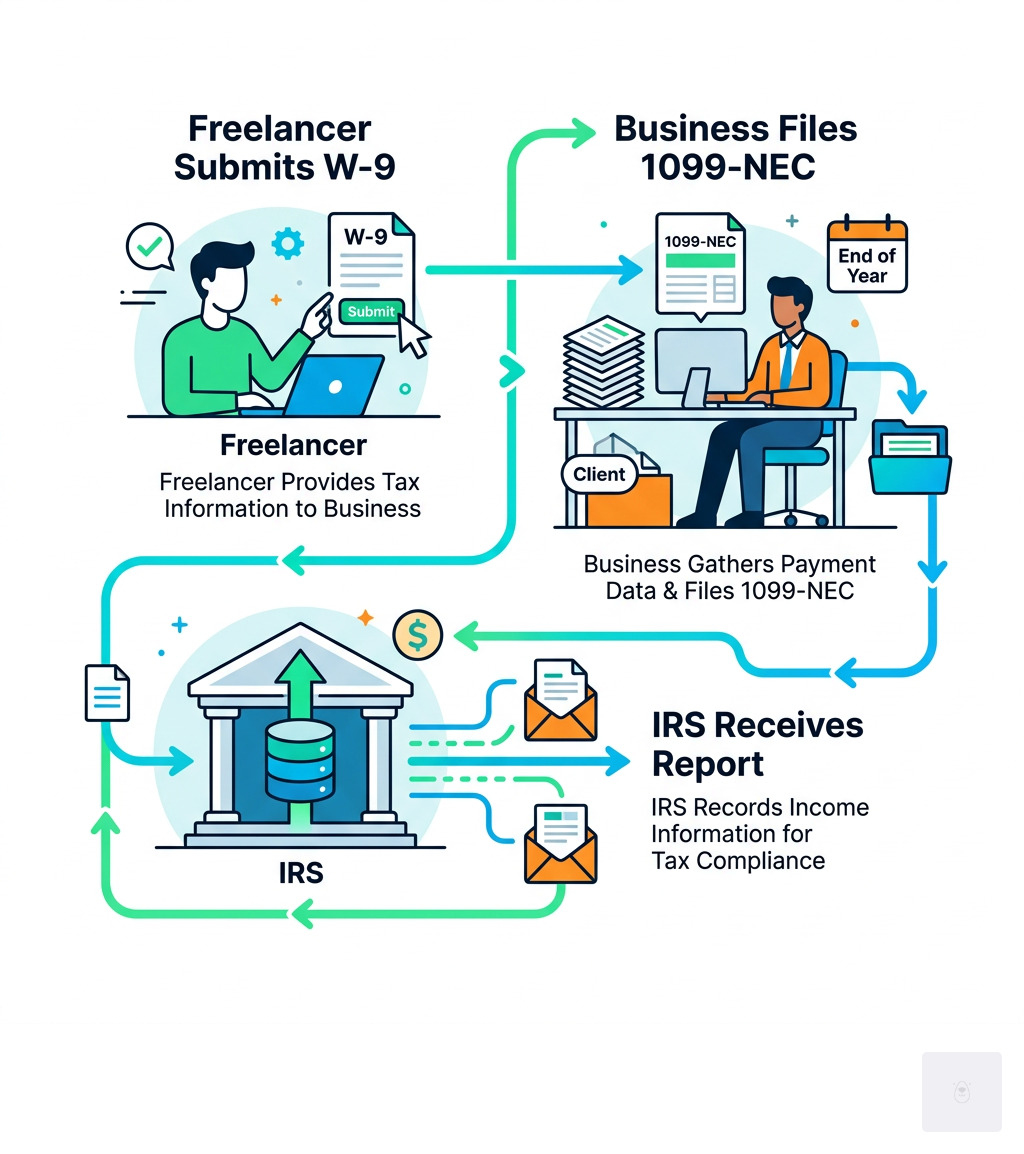
When we talk about a w 9 tax form free download, we are referring to IRS Form W-9, officially titled “Request for Taxpayer Identification Number and Certification.” While the name sounds like a mouthful, its job is quite simple: it acts as a formal record of your tax information so a business can report payments made to you to the IRS.
Think of it as a professional “ID card” for tax purposes. If you are a freelancer or a small business owner based here in Texas or anywhere else in the U.S., you aren’t an employee. Therefore, the company paying you doesn’t withhold taxes from your check. Instead, they use the information on your W-9 to generate a Form 1099-NEC at the end of the year. This form tells the IRS, “Hey, we paid this person $2,000 for web design services.”
The IRS uses this system to ensure that non-employee compensation is tracked and that everyone pays their fair share of taxes. Without a completed W-9 on file, a business might be legally required to withhold 24% of your payment immediately and send it to the IRS. This is known as backup withholding, and it is a headache we definitely want to help you avoid.
More info about W-9 features can help you understand how digital tools make this entire process more secure than mailing paper forms.
Who is Required to Submit a W-9?
Generally, if you are a U.S. person (which includes resident aliens) and you are providing services to a business, you will likely need to fill out a W-9. This includes:
- Freelancers and independent contractors.
- Consultants and gig workers (like those on Upwork or Fiverr).
- Vendors and small business entities.
- Sales professionals who have been paid $5,000 or more in a year.
The “magic number” is usually $600. If a business expects to pay you more than $600 in a calendar year, they are required by law to request a W-9 from you. Even if they pay you less, many businesses collect them upfront just to keep their records clean.
The Purpose of the TIN
The most critical part of the W-9 is your Taxpayer Identification Number (TIN). This is the number the IRS uses to track your tax obligations. For most individuals and sole proprietors, your TIN is simply your Social Security Number (SSN). However, if you have registered a formal business entity, you likely have an Employer Identification Number (EIN).
Using the correct TIN is vital. If the name on your tax return doesn’t match the TIN you provide, the IRS may flag the mismatch, leading to penalties for the business and potential backup withholding for you.
Learn how the process works to see how we help you match your identity to your tax requirements seamlessly.
Step-by-Step Guide: How to Fill Out a W-9 Form
Filling out a w 9 tax form free template doesn’t have to be a chore. Let’s break down the current March 2024 revision so you can fly through it.
Line 1: Name This must be the name shown on your individual income tax return. If you are a sole proprietor, enter your personal name here. Do not leave this blank!
Line 2: Business Name If you have a “Doing Business As” (DBA) name or a disregarded entity name that is different from the name on Line 1, enter it here. If you don’t have a separate business name, leave it blank.
Line 3a: Federal Tax Classification Check the box that applies to you. Most freelancers will check “Individual/sole proprietor or single-member LLC.” We will dive deeper into these classifications in the next section.
Line 3b: Foreign Partners This is a newer addition in the 2024 revision. It generally applies to partnerships or flow-through entities that have foreign partners or owners. Most domestic freelancers will leave this unchecked.
Address, City, State, and Zip Enter the address where you want to receive your tax documents (like your 1099-NEC).
Part I: Taxpayer Identification Number (TIN) Enter your SSN or EIN. Use the following table to decide which one to use:
| Entity Type | Recommended TIN |
|---|---|
| Individual | SSN |
| Sole Proprietor | SSN or EIN |
| Single-Member LLC | SSN (usually) |
| Corporation or Partnership | EIN |
Part II: Certification This is where you sign under penalty of perjury. By signing, you certify that the TIN you provided is correct and that you are not subject to backup withholding.
Selecting the Correct Federal Tax Classification
One of the biggest points of confusion on the w 9 tax form free is Line 3a. Here is a quick breakdown of the common choices:
- Individual/Sole Proprietor: You are working as yourself, even if you have a DBA.
- Single-Member LLC: If you are the only owner of an LLC and you haven’t elected to be treated as a corporation, you are a “disregarded entity” for tax purposes. You usually check this box and use your personal name on Line 1.
- C Corporation or S Corporation: Check these only if you have filed specific paperwork with the IRS to be taxed as a corporation.
- Partnership: Used when two or more people own the business together and it isn’t a corporation.
Using a W-9 Tax Form Free for Sole Proprietors
If you are a sole proprietor, your personal name is the “star of the show” on Line 1. Even if you have a fancy business name like “Lone Star Creative,” the IRS wants to see your legal name first. You can put “Lone Star Creative” on Line 2.
For your TIN, you can use your SSN, but many sole proprietors apply for an EIN just to keep their SSN private from clients. It is a great way to add a layer of security to your business dealings.
Check our pricing for secure tools to find out how you can manage these forms without exposing your sensitive data on paper.
Avoiding Penalties and Backup Withholding
The IRS does not play around when it comes to the W-9. If you fail to provide a correct TIN, you could face a $50 penalty for each failure. Even worse, if you provide false information with no reasonable basis that results in no backup withholding, you could face a $500 civil penalty.
The most immediate “penalty” for most freelancers, however, is backup withholding. If you don’t provide a W-9, or if the TIN you provide is incorrect, the person paying you is required to withhold 24% of your payment. Imagine earning $1,000 but only receiving $760 because you forgot to fill out a simple form!
How to Avoid Backup Withholding with a W-9 Tax Form Free
To avoid that 24% haircut, you must accurately complete the certification in Part II. Most people are not subject to backup withholding. You only become subject to it if the IRS has specifically notified you that you failed to report all your interest and dividends on previous tax returns.
If you have received such a notice, you must cross out item 2 in the certification section. If you haven’t received a notice, leave it as is and sign with confidence.
There are also “Exempt Payees” who are not subject to backup withholding at all, such as corporations (for certain types of payments) and tax-exempt organizations. These entities use specific codes (1-13) on Line 4 of the W-9.
Read our frequently asked questions for more details on specific exemption codes and FATCA reporting.
What to Do if You Don’t Have a TIN
If you are a new business owner or a resident alien and don’t have a TIN yet, don’t panic. You can still fill out a W-9.
- Apply for a TIN: Use Form SS-5 (for an SSN), Form W-7 (for an ITIN), or Form SS-4 (for an EIN).
- Write “Applied For”: In the TIN section of the W-9, you can write “Applied For” to show the requester that you are in the process of getting your number.
- 60-Day Grace Period: For certain payments (like interest and dividends), you generally have 60 days to get your TIN before backup withholding kicks in. However, for non-employee compensation, the payer may still be required to withhold until you provide the actual number.
W-9 vs. W-4: Key Differences for Workers
It is easy to get these two confused, but they serve very different purposes.
Form W-4 is for employees. When you start a traditional “9-to-5” job, you fill out a W-4 so your employer knows how much federal income tax to take out of your paycheck. Your employer also pays half of your Social Security and Medicare taxes.
Form W-9 is for independent contractors. No taxes are withheld from your pay. You are responsible for paying your own income tax and the full amount of self-employment taxes (the equivalent of both the employer and employee shares of Social Security and Medicare).
At the end of the year, employees get a W-2, while contractors get a 1099-NEC (or sometimes a 1099-MISC). Understanding this distinction is vital for your Form 1040 filing in April.
Latest Revisions: March 2024 vs. October 2018
The IRS recently updated the W-9 in March 2024. While the core of the form remains the same, there are a few key changes you should notice:
- Line 3b: As mentioned earlier, this new line is specifically for flow-through entities (like partnerships) to indicate if they have foreign partners. This helps with reporting requirements for Schedules K-2 and K-3.
- Digital Asset Reporting: While the W-9 itself doesn’t ask for your Bitcoin wallet address, the instructions have been updated to reflect that payments made via digital assets (cryptocurrency) are subject to the same reporting rules as cash.
- Updated Instructions: The 2024 version includes clearer guidance for disregarded entities and LLCs, which have historically been the most confusing parts of the form.
Don’t use an old 2018 version if you can help it. Using the latest w 9 tax form free revision ensures you are compliant with the newest IRS regulations.
More info about our services can help you stay updated as tax laws continue to evolve.
Frequently Asked Questions about W-9 Forms
Can I fill out and sign a W-9 form electronically?
Yes! The IRS has allowed electronic signatures on W-9 forms since 1998, provided the system used meets specific requirements. The system must ensure data integrity, provide a hard copy if requested, and include a signature that is clearly linked to the perjury statement. Using a secure digital tool is often safer than sending a PDF via unencrypted email, which can expose your SSN to hackers.
What is the difference between an SSN and an EIN on a W-9?
An SSN (Social Security Number) identifies you as an individual. An EIN (Employer Identification Number) identifies your business entity. If you are a sole proprietor, the IRS allows you to use either. However, many freelancers prefer using an EIN because it means they don’t have to give their private SSN to every client they work with. It is a simple way to protect your identity.
Who is exempt from backup withholding?
Most individuals are not “exempt,” but they aren’t subject to it unless they have a history of underreporting. However, certain entities like corporations, government agencies, and financial institutions are generally exempt from backup withholding. These entities use “Exempt Payee Codes” on Line 4 to notify the payer that no withholding is necessary.
Conclusion
Navigating tax season as a freelancer can feel like wandering through a maze, but the W-9 doesn’t have to be a roadblock. By using a current w 9 tax form free template and following the steps we have outlined, you can ensure your payments arrive on time and without the sting of backup withholding.
At Fillable W9, we are dedicated to making tax compliance simple and secure. Whether you are a sole proprietor in Austin or a consultant in Dallas, our tools are designed to help you manage your tax documents with ease. Don’t let paperwork slow down your hustle.
✅ Ready to complete your W9 in minutes? Apply here now